Importing a car to Belgium, what you need to know
A practical guide to buying a car abroad and bringing it to Belgium, whether you are buying inside the EU or from outside Europe.
Buying a car abroad can save money or give access to vehicles that are hard to find locally. But the process involves more than just finding the right car and arranging transport. Taxes, documents, registration steps, and compliance requirements all need to be handled correctly before the vehicle is legally on the road in Belgium. This guide explains the key steps and what to watch out for.
Two main import routes
Before going into detail, there are two very different situations depending on where the car comes from.
Both routes require correct documentation, registration preparation, and understanding of costs before anything moves forward. The steps and fees are different enough that it is important to know which route applies before making any decisions.
New car or used car, why this matters
The classification of your vehicle as new or used affects how much VAT you pay and in which country you pay it. A car is considered new if it was first registered less than 6 months ago OR has travelled fewer than 6,000 kilometres, whichever applies first. Both conditions need to be false for the car to count as used.
Many buyers assume a car is used simply because it has been registered before. Always check both age and mileage. If either threshold is still within the new car definition, the VAT rules change significantly.
| Situation | VAT rule |
|---|---|
| New car from EU | You pay 21% VAT in Belgium, seller's VAT is deducted or refunded |
| Used car from EU (private seller) | No VAT normally required |
| Used car from EU (dealer) | VAT often included under the margin scheme |
| Any car from outside the EU | 21% import VAT applies on arrival regardless of age |
Buying a car from another EU country
Importing a used car from Germany, the Netherlands, France, or another EU member state is generally the simpler route. There are no customs formalities between EU countries and no standard customs duty to pay.
What you still need to arrange
Always request the full registration history and check whether the car was previously imported itself. A car sold in Germany may have been imported from Japan or the USA earlier, which can create additional compliance questions.

Buying a car from outside the EU
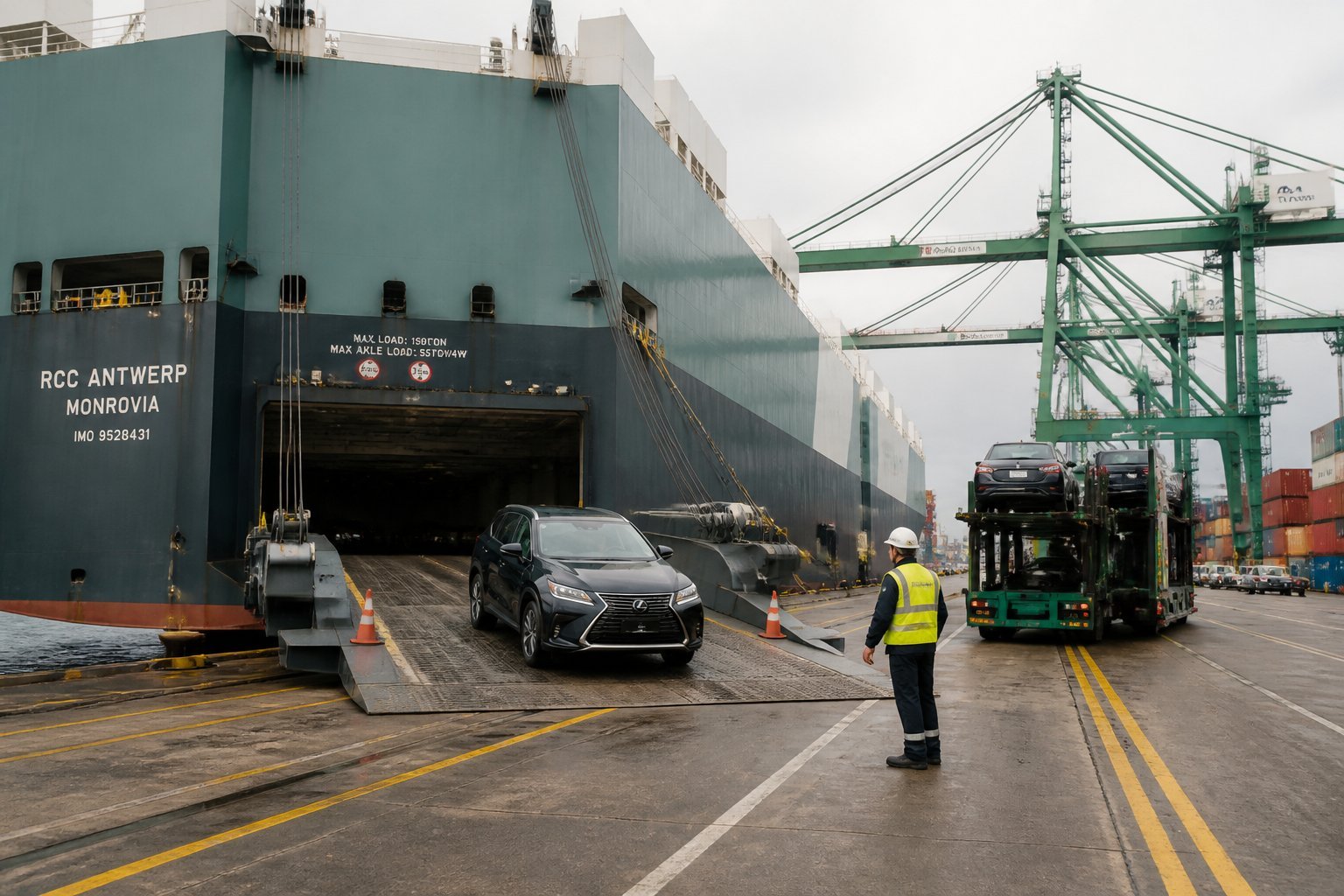
Importing from the United States, the United Kingdom, Japan, or any other non-EU country is a more complex and more costly route. Multiple steps must be completed correctly before the car can be registered in Belgium.
Steps involved
Many buyers focus only on the purchase price of the car and forget to add all landing costs before comparing to a Belgian price. The final landed cost, including duty, VAT, shipping, and compliance, must be calculated before deciding whether the import makes financial sense.
What you will pay on an imported car
This section gives a clear overview of the main financial obligations depending on where the car comes from. All amounts below are based on 2026 rates.
| Cost item | Amount / note |
|---|---|
| Customs duty | None between EU countries |
| VAT (used car, private seller) | None due in Belgium |
| VAT (new car or dealer) | 21% in Belgium |
| Technical inspection, petrol | Approx. €46 incl. VAT |
| Technical inspection, diesel | Approx. €57 incl. VAT |
| Second-hand inspection (tweedehandskeuring) | Approx. €91 incl. VAT |
| BIV (vehicle registration tax) | Varies by CO2, age, fuel type |
| Cost item | Amount / note |
|---|---|
| Import duty | 6.5% of customs value |
| Import VAT | 21% on customs value + duty + shipping |
| Technical inspection, petrol | Approx. €46 incl. VAT |
| Technical inspection, diesel | Approx. €57 incl. VAT |
| Homologation (car before 2007) | From approx. €1,500 excl. VAT |
| Homologation (car after 2007) | From approx. €2,750 excl. VAT + modifications |
| Lighting modifications (if needed) | Variable, depends on vehicle |
| BIV (vehicle registration tax) | Varies by CO2, age, fuel type |
Transfer of residence exemption may apply if you are moving to Belgium and have owned the vehicle for more than 6 months. This can reduce or eliminate import duty and VAT. Ask us if this applies to your situation.
Documents you will need
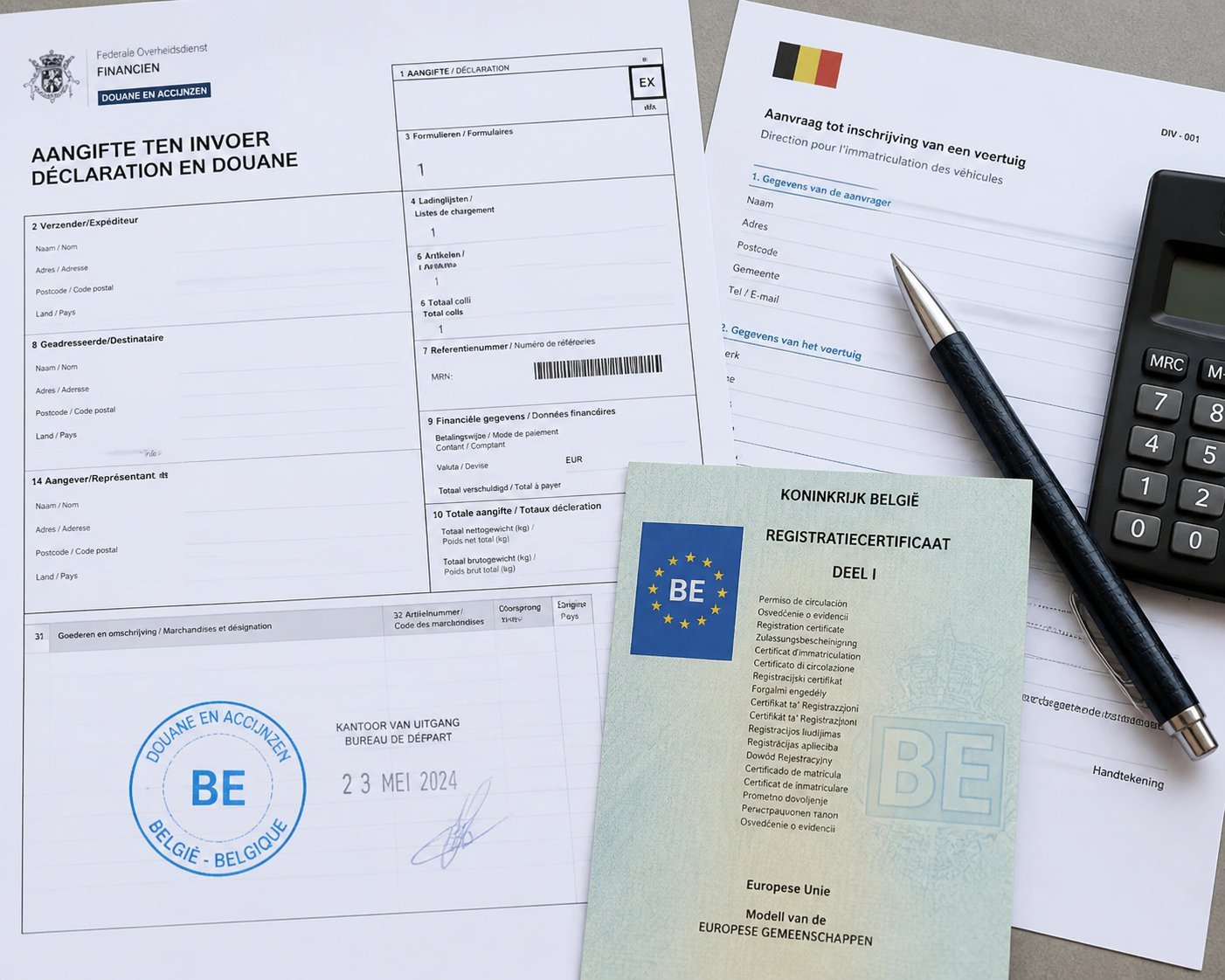
Having the right documents from the start avoids delays and extra costs later.
Missing or incorrect documents are the most common cause of delays in Belgian registration. The COC in particular is often missing for non-EU vehicles. We help clients understand which documents are needed for their specific situation before the process starts.
Homologation, when is it needed?
Not every imported car can be registered immediately after arrival. Vehicles that do not meet European technical standards may require additional work before they can pass inspection. This is most common for non-EU vehicles.
Most commonly needed for
What may be required
Cost indication (2026)
Prices based on 2026 individual approval rates. Exact costs depend on the specific vehicle. Contact us for an assessment before making any purchase decision.
Homologation is not always required, it depends on the specific car and its specification. We check this case by case before recommending an import, so there are no surprises at the inspection stage.
Mistakes to avoid when importing a car to Belgium

How AutoLink M.A.T. can support your import
Navigating an import alone is possible but takes time, care, and knowledge of the process. AutoLink M.A.T. helps clients at different stages depending on what they need.
You do not need to use our full service to benefit from guidance. Some clients only need support at one specific stage, and that is fine too.
Ask about import supportFrequently asked questions
Not always. For a used car bought from a private individual in another EU country, no VAT is normally owed in Belgium. The situation is different for new cars or dealer sales.
The E705 is a Belgian customs declaration you submit via MyMinfin before registering an imported vehicle. It applies to both EU and non-EU imports. Your insurance company or a specialist can help you complete it correctly.
An EU import can often be completed within a few weeks if documents are in order. A non-EU import takes considerably longer due to shipping, customs, and possible compliance work. US imports typically take 8 to 14 weeks from purchase to delivery.
Most Belgian registration steps require your presence or a correctly signed mandate. We advise clients on what is needed before the process starts.
No. The car must be fully registered and insured before it can be driven legally on Belgian roads.
The car needs to be repaired or modified to meet the required standard. This is why checking compliance before purchase is important, especially for non-EU vehicles.
Not always. It depends on the specific car and its technical specification. We assess this case by case before recommending a purchase so there are no unexpected costs later.
Have questions about your specific situation?
Every import situation is slightly different. If you are planning to buy a car abroad and want to understand the process and costs before committing, we can help you think it through clearly.